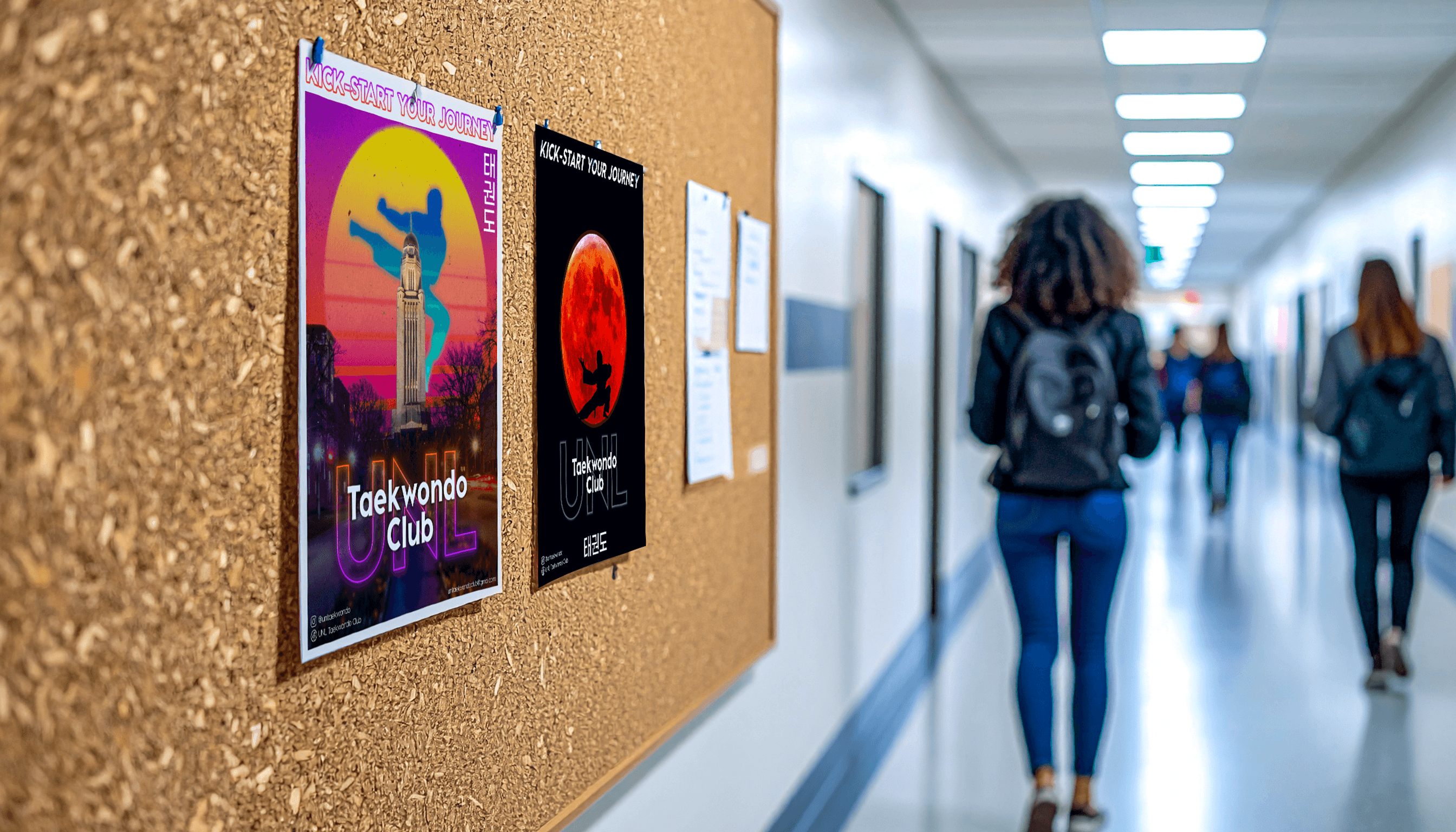
The Brief
Design a poster for a real campus organization using the formal and conceptual principles of a historical design movement. The subject: the UNL Taekwondo Club. The movement: 1980s retro-futurism.
The constraint was authenticity. Not pastiche for irony's sake, but a genuine engagement with the period's visual principles applied to a contemporary subject.
Why the 80s
The 1980s design movement celebrated color, excess, and optimism. Neville Brody, Paula Scher, Patrick Nagel worked in a visual culture shaped by MTV, early digital technology, and a collective belief that the future would be brighter and louder than the present.
That energy maps directly onto martial arts. Taekwondo is kinetic, disciplined, and visually explosive: high kicks, spinning forms, precision impact. The 80s had the visual vocabulary to match that intensity.
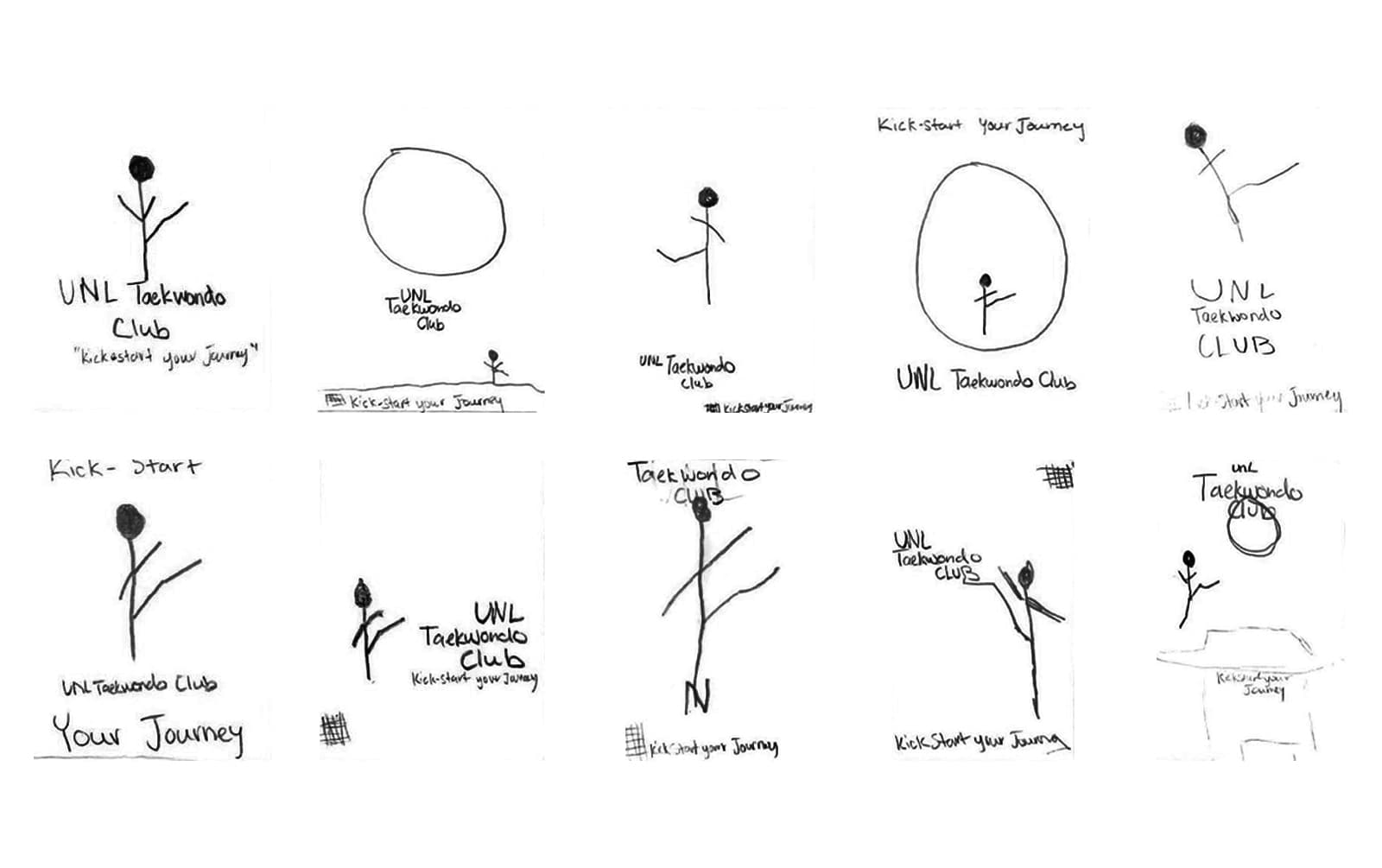
Key Decisions
Color System
The palette is pure 1980s signal:
Neon Magenta
#FF2C83
Energy and intensity.
Cyan
#00FFFF
Digital vibrancy.
Purple
#9400D3
Depth and contrast.
These colors aren't chosen for harmony. They're chosen for impact. The 80s prioritized visual force over subtlety, and the poster follows that logic.
Typography
Visby Sans CF carries the headlines. Geometric, clean, with enough personality to feel era-appropriate without becoming costume. Gmarket Sans adds a structured counterpoint for subheads, nodding to Taekwondo's Korean origins through type selection.
The headline treatment uses reflective chrome rendering, a direct reference to 80s metallic type that appeared on everything from movie posters to album covers.
The Compositions
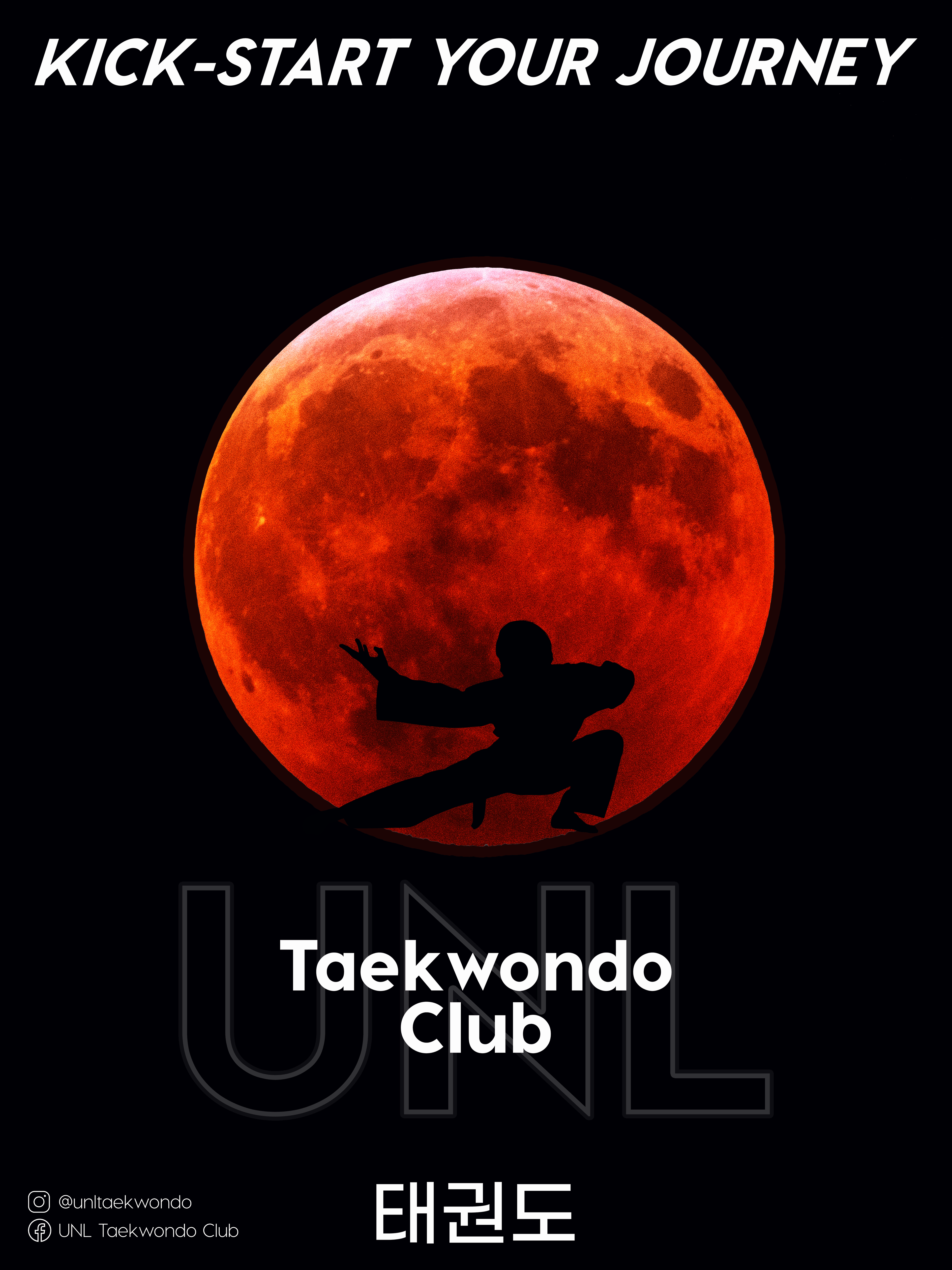
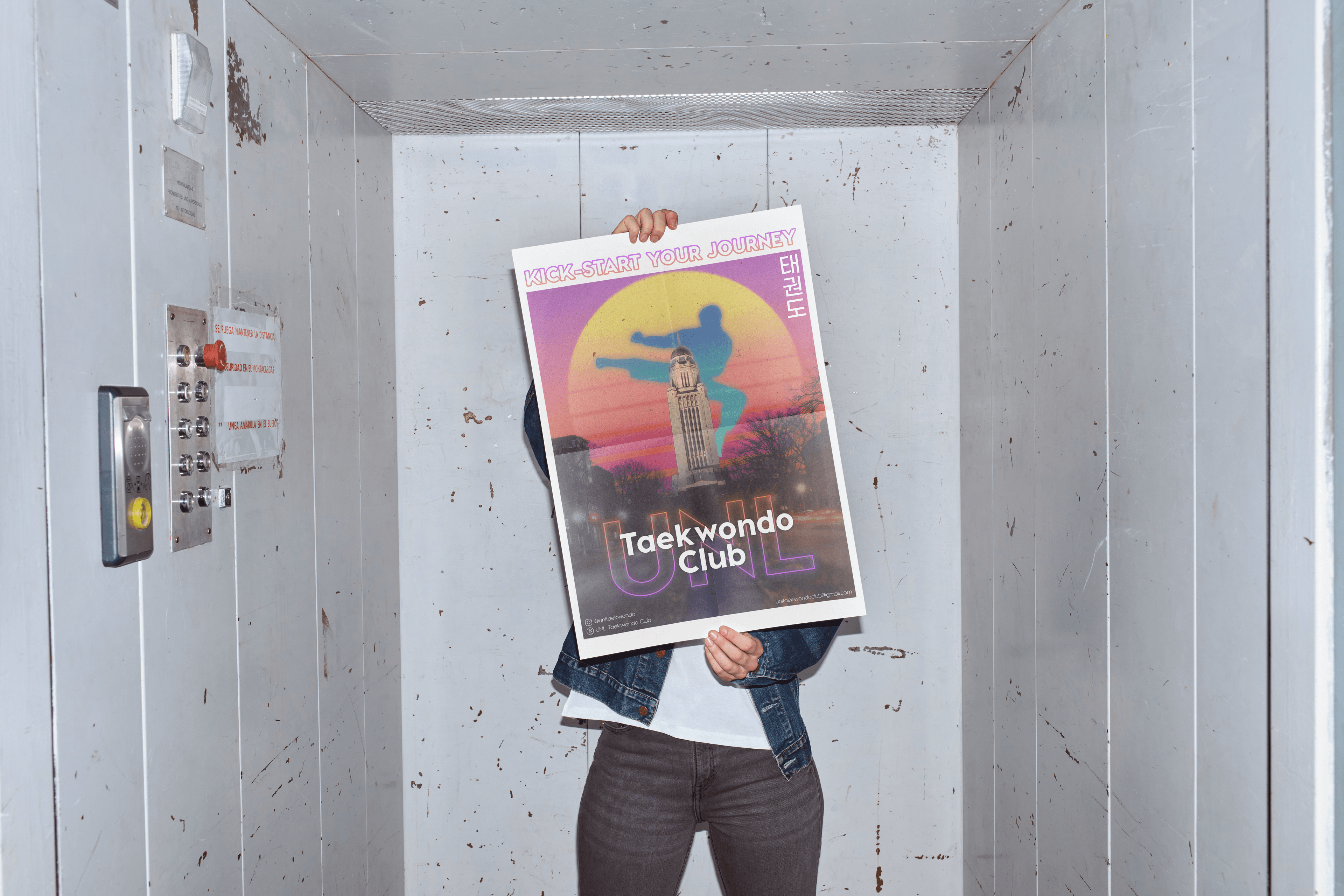
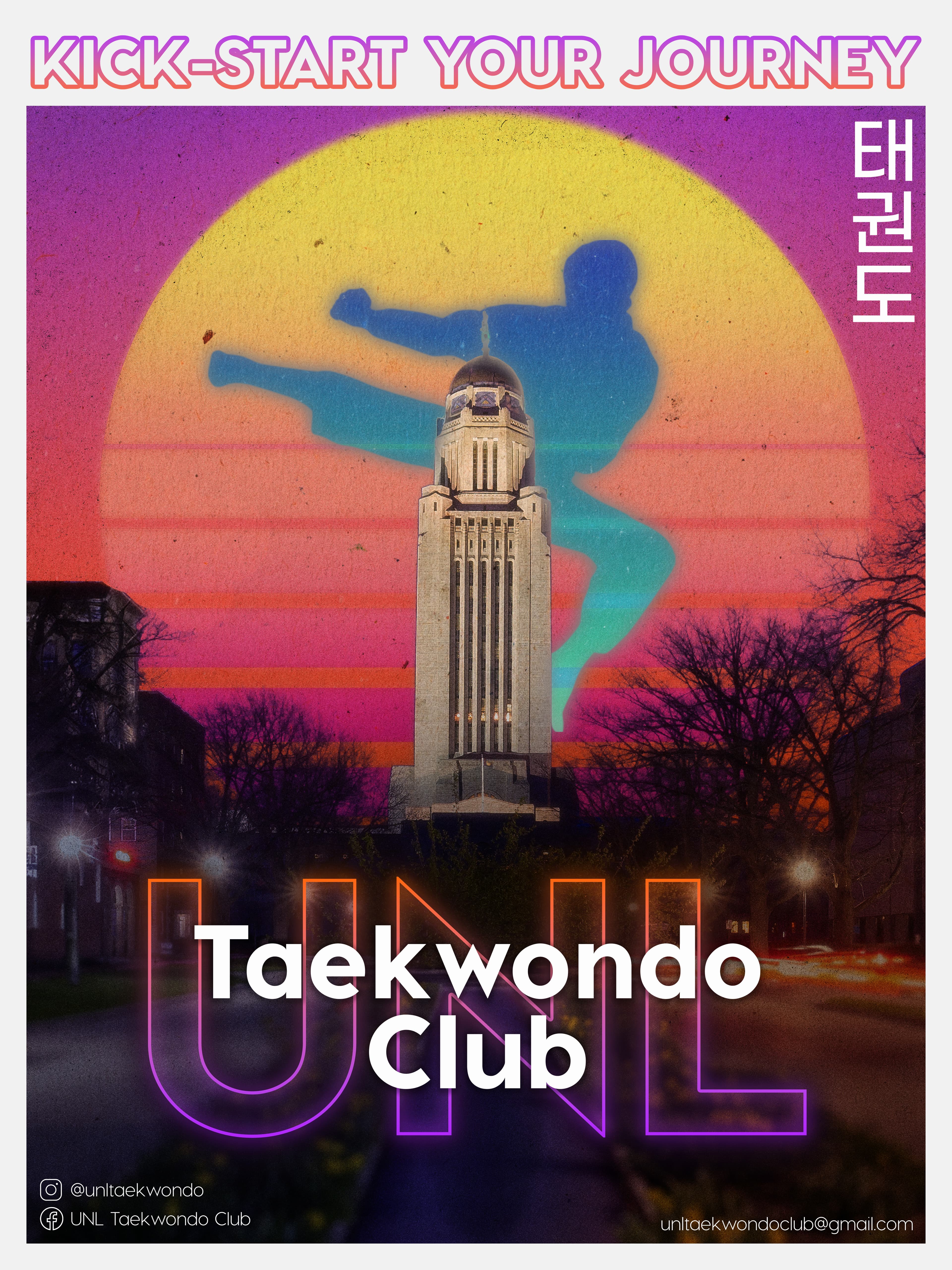
Two poster variations explore different aspects of the movement. The first emphasizes vertical energy and perspective grids, the kind of vanishing-point depth that defined 80s sci-fi aesthetics. The second pushes the color further, layering lens flares and streaked lighting over the martial arts figure.
The Result
Design history isn't academic trivia. It's a toolkit. Understanding why the 80s looked the way it did (media explosion, digital optimism, youth culture) makes it possible to use those principles intentionally rather than superficially.
This poster doesn't cosplay the 80s. It uses the decade's design logic to solve a real communication problem: make a campus martial arts club look as intense as the discipline actually is.