The Brief
Design a fitness map that makes walking across campus feel intentional. Not a utility map, a system that reframes movement as exploration and exercise as discovery.
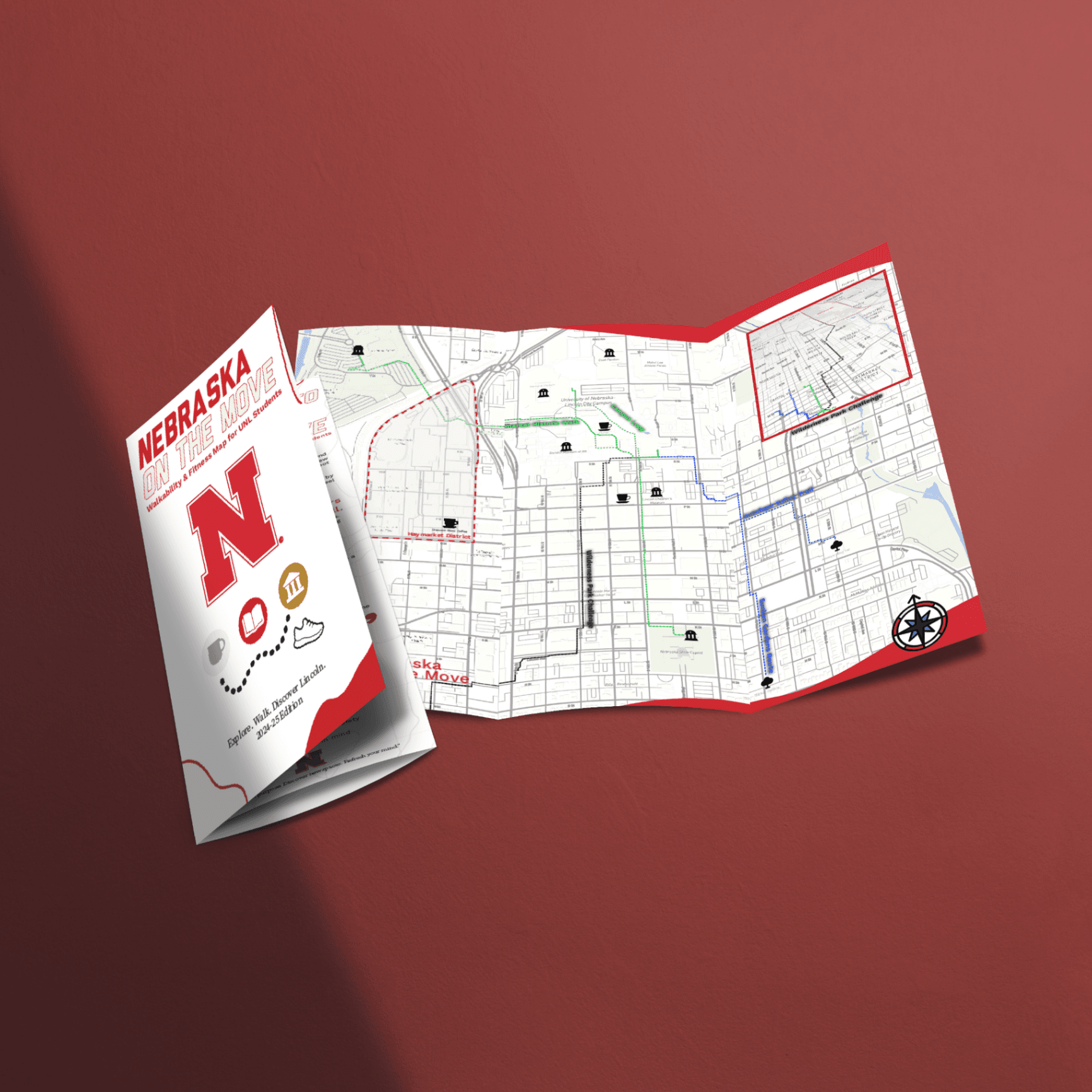
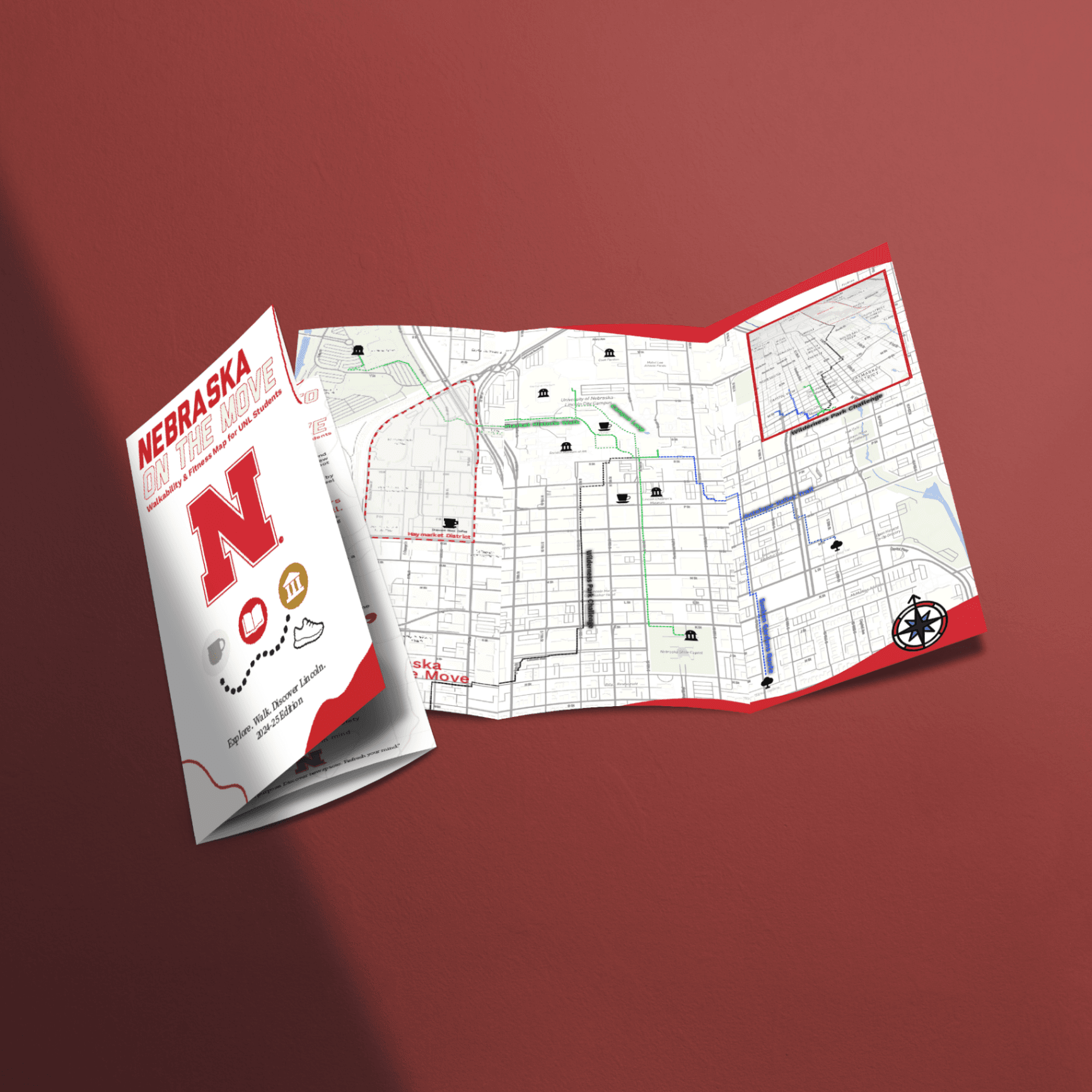
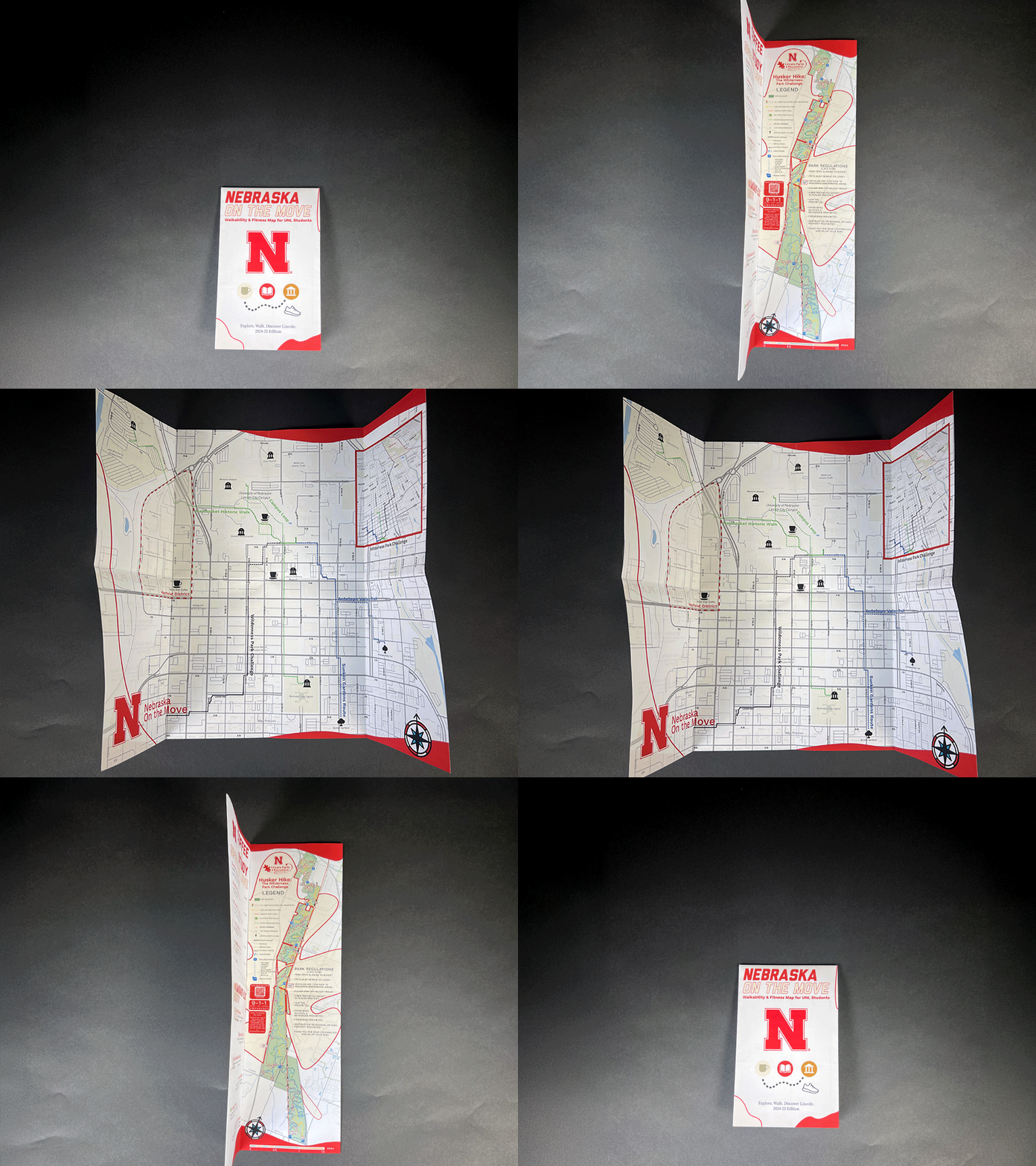
The project had to work at two scales: a foldable 20"x16" printed object you'd actually carry, and a digital version optimized for screens. Both needed to communicate route difficulty, points of interest, and campus geography without overwhelming the user.
The Approach
The insight came from ski trail maps. That visual system (green for easy, blue for moderate, black for expert) is immediately understood without a legend. It turns terrain into a game with self-selected difficulty.
Applied to a campus walking context, this framework transforms everyday routes between class, coffee, and the library into a fitness challenge. Three difficulty tiers, real GPX-tracked route data, and a curated set of destinations that make each walk worth taking.
The System
Route Classification
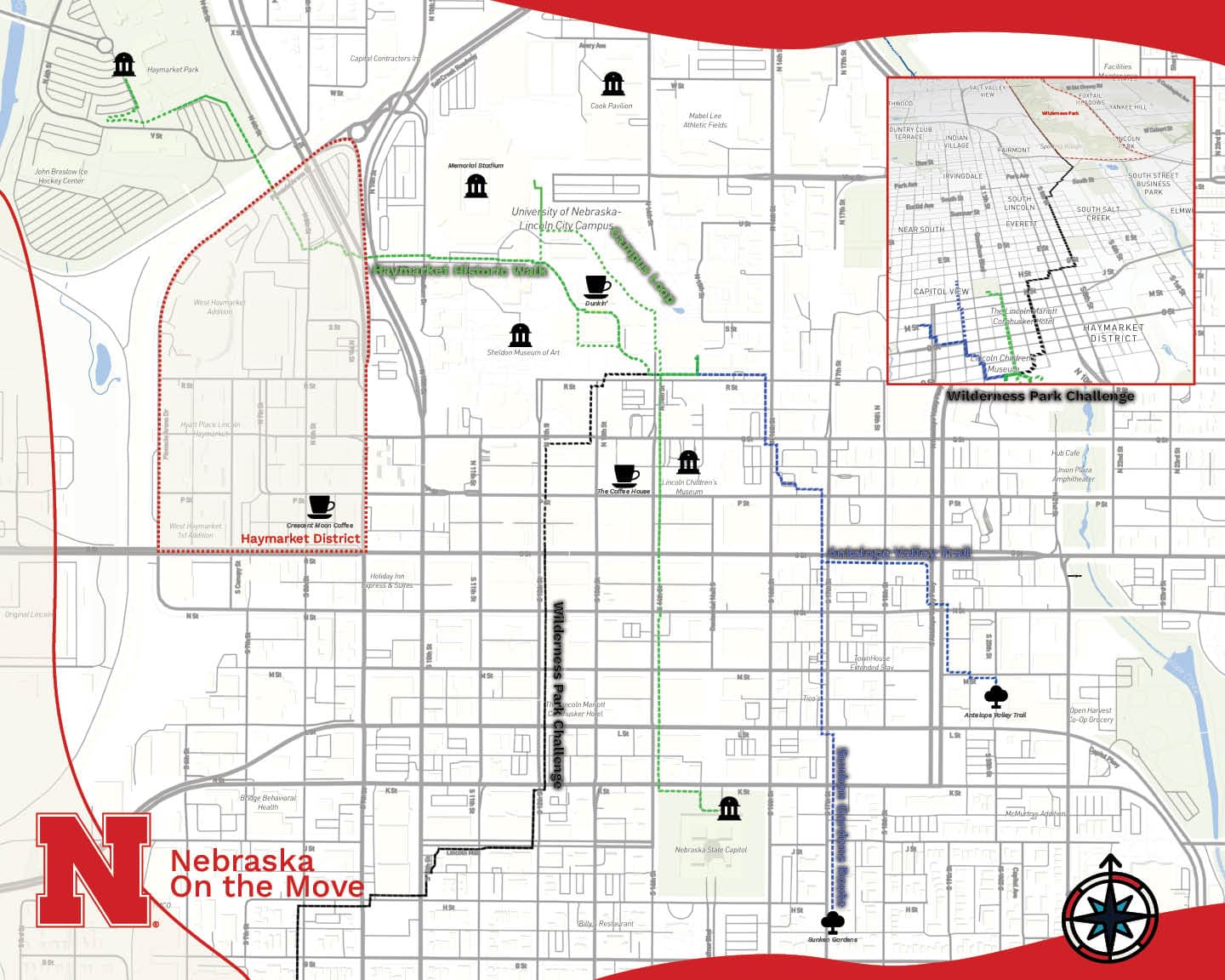
Routes are color-coded by difficulty and distance:
- Green (Easy) short, flat, high-frequency paths. Coffee run distance.
- Blue (Moderate) mid-distance with light elevation. A real walk between classes.
- Black (Advanced) full campus traversals. The kind of walk that replaces a gym session.
Each route connects real points of interest: The Mill, Love Library, Memorial Stadium, Sheldon Museum of Art, Sunken Gardens. Navigation becomes a curated campus experience.
Visual Language
The map was built in Mapbox Studio using GPX route data, then refined in Illustrator for print production. The typography uses Inter for legibility at map scale and Söhne for headings that carry visual authority without competing with the route data.
The color palette stays neutral: light warm background with the three route colors carrying all the informational weight. Icons are custom, minimal, and sized for the fold format.
Print & Production
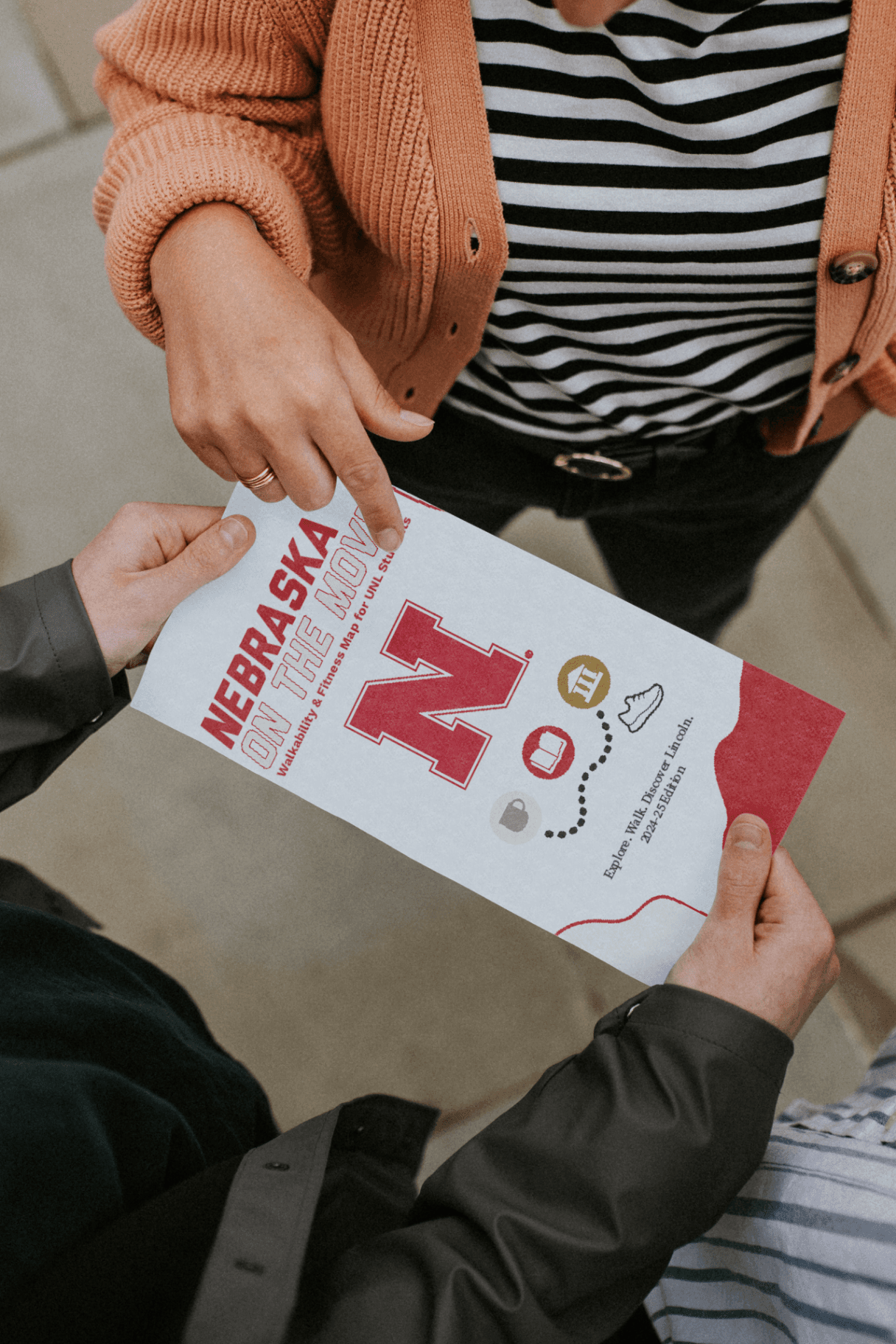
The map prints at 20"x16" and folds down to 5"x8", small enough for a back pocket or bag. The fold pattern was planned alongside the layout so that key information panels land on visible faces when folded.
CMYK calibration was done for uncoated stock. The final object has weight and texture. It feels like something worth keeping rather than recycling.
The Result
Information design isn't about showing all the data. It's about building a system that makes the right data immediately useful. The ski-trail metaphor does the heavy lifting: users already know what green, blue, and black mean. The design just has to stay out of the way and let that familiarity work.
Data visualization that drives behavior. Print production that works in the real world.